Reliable HL7® v2 → FHIR®
Integration Platform for Modern Healthcare
Focus on your healthcare application. Let FireSonic handle
interoperability.
Receive HL7 v2, transform it into production-ready FHIR R4, apply site-specific
workflow logic, validate clinical context, and deliver with durable processing and operational
visibility.
A focused interoperability layer built around reliable processing, Groovy™
customization, semantic quality, operational visibility, and practical modernization.
Reliable Processing
Durable persistence, queueing, retries, restart recovery, and explicit processing states.
Code-First Customization
FireSonic handles standard mapping in the platform core. Customize local workflows with
Groovy.
Semantic Validation
Context-aware checks catch technically valid but operationally suspicious clinical data
before delivery.
Production Observability
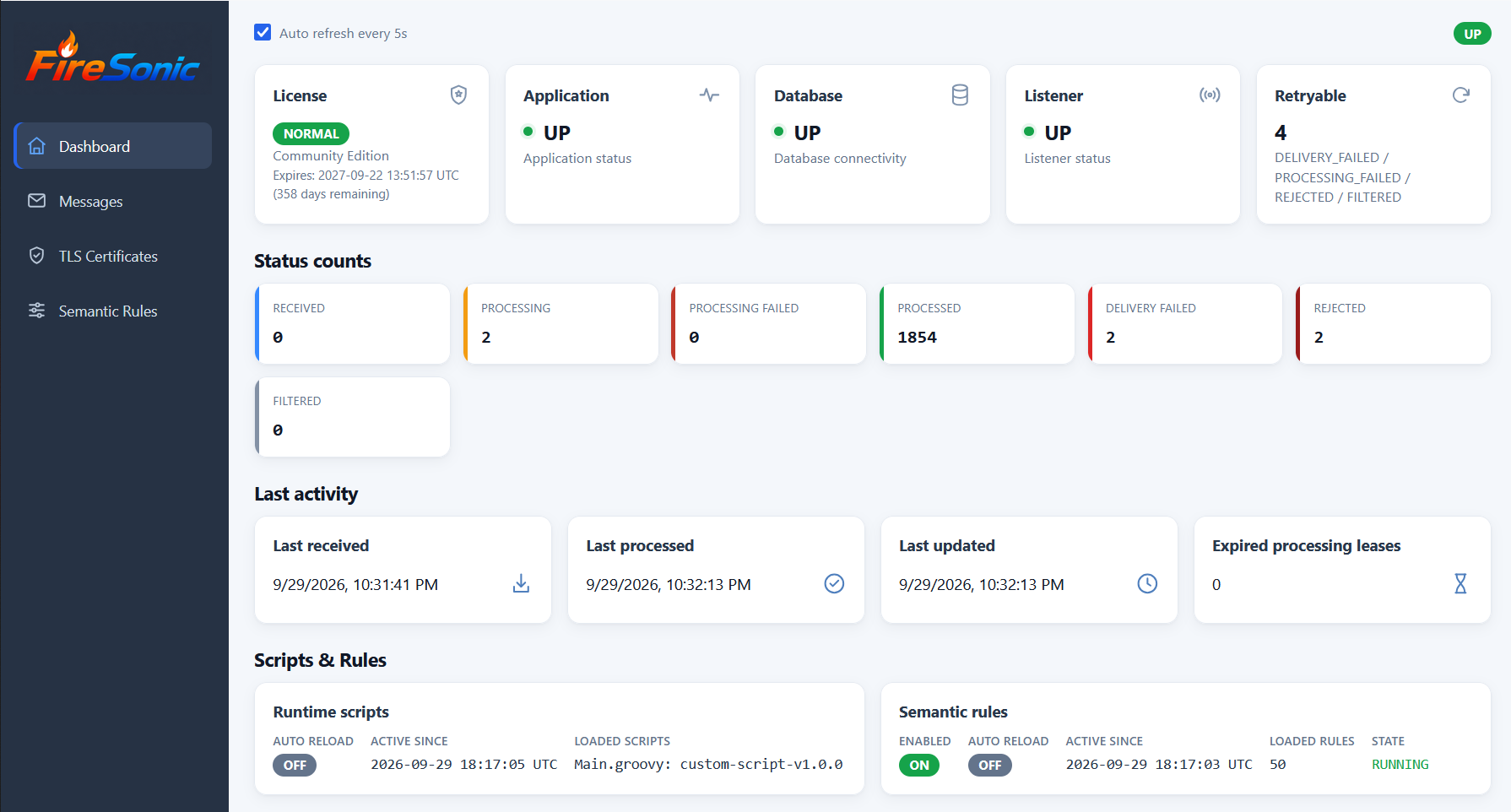
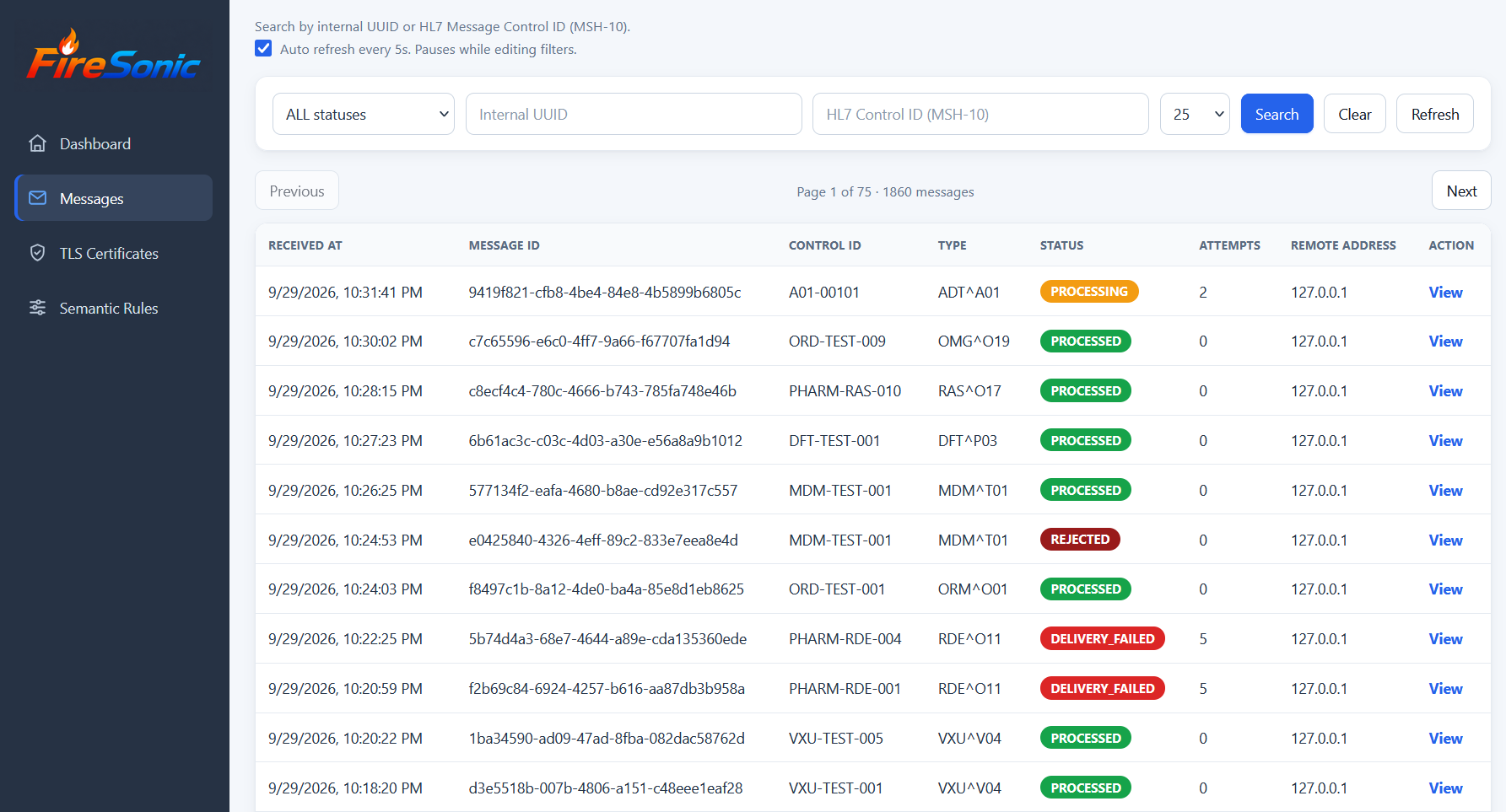
Administration, health, metrics, status tracking, diagnostics, and operational traceability.
Modernization Without Replacement
Integrate existing hospital systems and expose reliable FHIR without replacing the systems
that run care.
Modernization path
Don’t Replace Legacy. Modernize It.
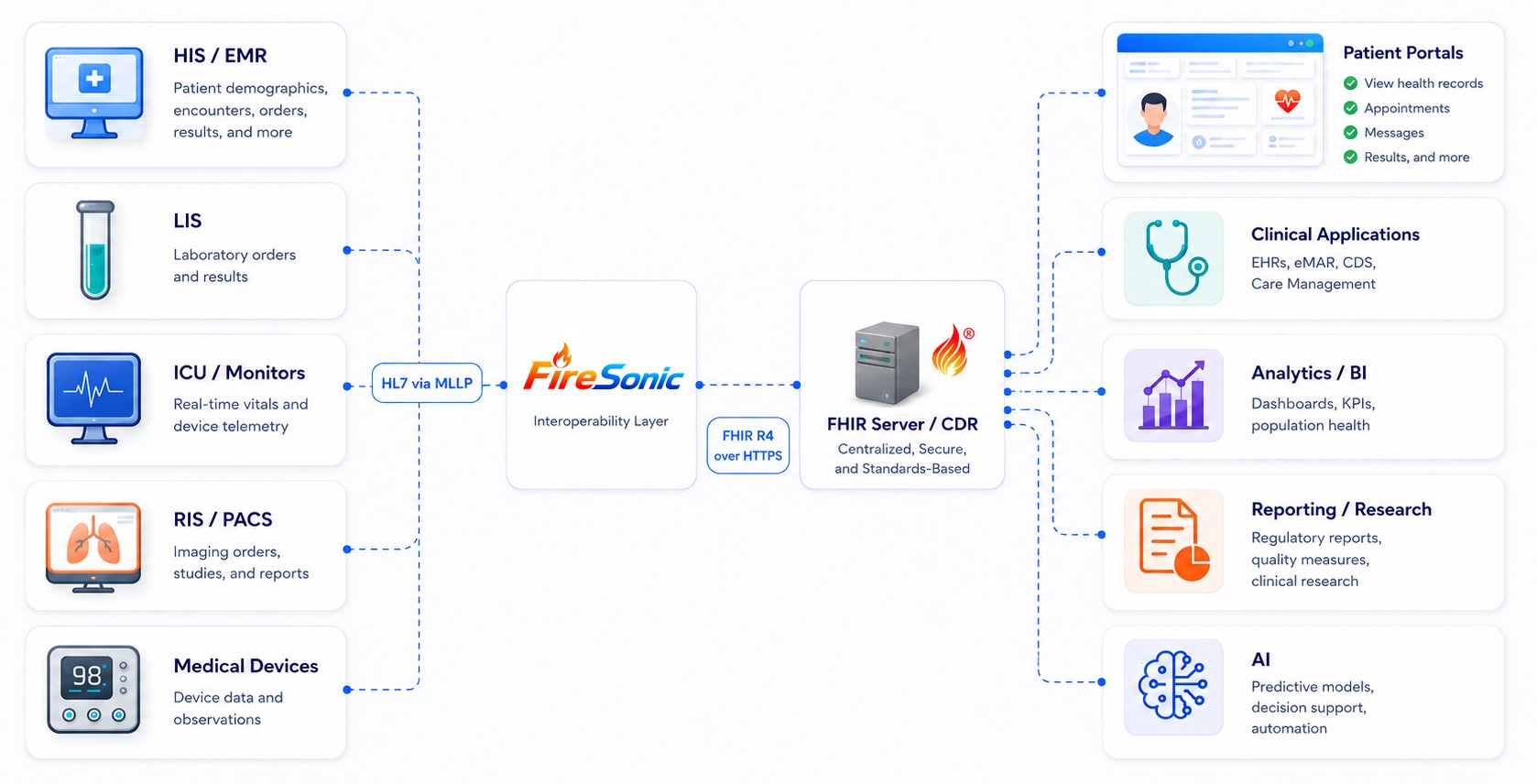
Keep the HIS/EMR, LIS, RIS/PACS, and device workflows you already operate. Add
FireSonic as the interoperability layer between HL7 v2 and modern FHIR applications.
Less custom engine code
Produce production-ready FHIR with less custom interface-engine code
FireSonic handles the standard HL7 v2 → FHIR transformation in the
platform core. Use Groovy for site-specific normalization,
enrichment, reconciliation, workflow
behavior, and external integrations.
Interpret event-driven messages into the resulting resource state.
2
HL7 action code → transaction operation
Create, update, cancel, and merge semantics influence transaction behavior.
3
Business identifier → idempotency
Stable identifiers help determine create versus update decisions.
4
Segment grouping → resource topology
Preserve relationships when groups become linked FHIR resources.
Start building
Community Edition and Developer SDK
Run the platform locally, inspect real HL7 → FHIR output, and develop customer-specific logic in a familiar code-first workflow directly in your IDE — including IntelliJ IDEA or Eclipse.
Community Edition
Run FireSonic locally or with Docker®
Evaluate the platform with HL7 intake, FHIR R4 transformation, Groovy scripting, semantic
rules, FHIR delivery, and administration.
@Override
MessageEnvelope preConvert(MessageEnvelope envelope) {
    def msg = envelope.hl7Message

    // Normalize local sex value W to F before conversion.
    if (HL7Helper.get(msg, "/PID-8") == "W") {
        HL7Helper.set(msg, "/PID-8", "F")
    }

    // Customer sends visit number in a non-standard field.
    HL7Helper.copy(msg, "/PV1-50-1", "/PV1-19-1")

    return envelope
}